This guide to Texas Gulf Beaches: Where Swimming and Fishing Both Fit starts with one choice: open Gulf surf or calmer bay water. Match the swimming area, fishing access, and facilities at the specific beach segment, then check current conditions before setting out.
Key Takeaways
- Choose Gulf surf for open water and surf fishing, while keeping casting well away from swimmers and watching changing surf conditions.
- Choose a bay shoreline when calm, shallow water is the priority, but check the exact swimming and fishing access.
- Match the fishing method to the shore. Piers, jetties, open beach, and bay edges each offer different access and safety considerations.
- Check facilities and vehicle access. Parking, restrooms, showers, camping, and driving rules vary by location.
- Check conditions and rules on the day. Review surf, wind, tide, beach warnings, water quality notices, closures, and fishing requirements.
- Browse our beaches suited to swimming as you narrow down a Texas Gulf Coast outing.
Free Printable Field Reference & Checklist (PDF)
Save or print our one-stop reference sheet for this guide: Texas Gulf Coast Beach Access Matrix: Bollard Permits, 4×4 Driving, Fishing Piers, and Swim Zones. Includes the full specification comparison matrix and step-by-step field checklist.
Choose between Gulf surf and calmer bay water
Choose a Gulf facing beach when you want open water, waves, and surf fishing. Waves and currents can change, so treat swimming and casting as separate activities and use the day’s surf conditions to decide where each one fits.
Corpus Christi’s Gulf Beach has wide sand, moderate waves, and multiple access points with parking. Its surf can suit boogie boarding and beginner surfers, while open water makes it a natural setting for surf fishing. Visitors adding a surf session can also use our surfboard guide to compare board shapes and sizes.
Choose a bay side shoreline when calmer, shallower water is the priority. Palacios Beach sits on Matagorda Bay, with calm, shallow water.
| Setting | Typical water exposure | Swimming considerations | Fishing method | Access tradeoffs |
|---|---|---|---|---|
| Gulf surf | Open Gulf water; moderate waves at Corpus Christi’s Gulf Beach | Surf and currents can change, so separate casting from swimming. | Surf fishing from an open shoreline | Multiple access points and parking at Corpus Christi’s Gulf Beach |
| Bay shoreline | More protected water, including calm, shallow water at Palacios Beach | Check swimming access separately from fishing areas. | Bay fishing from shore | Shoreline conditions vary by spot. |
| Channel | Moving water through a passage between coastal waters | Keep swimming separate from channel edges, jetties, and casting zones. | Jetty fishing near channel water | Access is concentrated around the channel and its structures. |
For a wider choice of beaches and access styles, browse The Beach Directory. We bring together practical beach information to help beach enthusiasts compare amenities, accessibility, conditions, and local tips.
Match the fishing method to the shoreline
Surf fishing uses bait or lures cast beyond breaking waves. Choose a clear stretch and cast away from swimmers, access paths, and occupied water; if people enter the casting zone, stop and move.
Jetty fishing can reach moving water and deeper channels, but uneven rocks, waves, and exposed hooks make jetties a poor place to combine casting with nearby swimming. Wear stable footwear and keep tackle controlled as you move.
Pier fishing keeps anglers on a defined structure and can suit a mixed outing when swimmers use a separate shoreline area. A pier’s presence does not make every part of the nearby beach suitable for swimming.
Shore fishing works where there is room to cast without crossing a swim area. Choose a quiet stretch, and secure hooks, bait, and tackle when moving between fishing and swimming.
Indian Point Beach, part of Indian Point Park on Corpus Christi Bay, pairs a sandy shoreline with a 1,275 foot lighted fishing pier extending into the bay. That defined pier access makes it easier to plan fishing separately from time in the water.
At channels and jetties, swimmers should use a separate area away from casting and rocks.
Simple rule: Fishing access and swimming access can share one beach, but they should not share the same casting space.
Compare coastal settings and access
Compare individual beach segments, not just towns or islands. A Gulf shore, channel, and bay side can have different water exposure, fishing options, and access even when they belong to the same coastal area.
Aransas Pass offers several small pocket beaches along Redfish Bay, with shore fishing opportunities and fishing charters. South Beach is the southernmost accessible portion of San Jose Island, reached by a short jetty boat ride from Port Aransas; its location offers a different kind of access from a roadside bay shoreline.
McFaddin Beach has 15 miles of remote, undeveloped shoreline, while Matagorda Peninsula Beach offers a different coastal setting.
| Coastal setting | Stated access | Fishing style | Swimming considerations | Concrete specification |
|---|---|---|---|---|
| Redfish Bay pocket beaches | Several small shoreline access points at Aransas Pass | Shore fishing or charters | Choose the specific pocket beach and keep casting clear of swimmers. | Small pocket beaches line the bay shoreline. |
| Island shoreline | Check access for the chosen location | Fishing access varies | Keep swimming separate from fishing activity. | Confirm the access point before setting out. |
| Coastal shoreline | Check access for the chosen location | Fishing access varies | Compare water exposure before swimming. | Confirm the access point before setting out. |
| Remote McFaddin shoreline | Beach driving is permitted; four wheel drive is recommended. | Fishing | Check current advisories and plan for a remote visit. | 15 miles of undeveloped shoreline |
Vehicle access is destination specific.
Plan facilities and activities around the group
For a family swim stop, look for a designated swimming area alongside practical amenities.
For a longer outdoor visit, Galveston Island State Park Beach covers 2,000 acres and offers access to both beach and bay sides, along with camping options. The range of coastal settings helps groups choose between an open Gulf visit and a bay side outing.
Keep fishing gear and casting away from designated swim zones, busy access points, and picnic areas. Agree on a separate fishing area before anyone enters the water, then pack water, sun protection, suitable footwear, a first aid kit, and a secure place for hooks and tackle.
Check water conditions and fishing rules before leaving
Check the surf forecast, wind, tide, and current beach flag warning system on the day of your visit. Postpone swimming when conditions or warnings indicate unsafe water, and review water quality notices and beach closures for the specific access point because conditions can vary along the coast.
Since 2004, Texas Beach Watch has managed a network of 164 monitoring locations at 61 designated contact recreation beaches, according to The Meadows Center for Water and the Environment, Texas State University. This monitoring network offers useful context when you check water quality information for a planned swim.
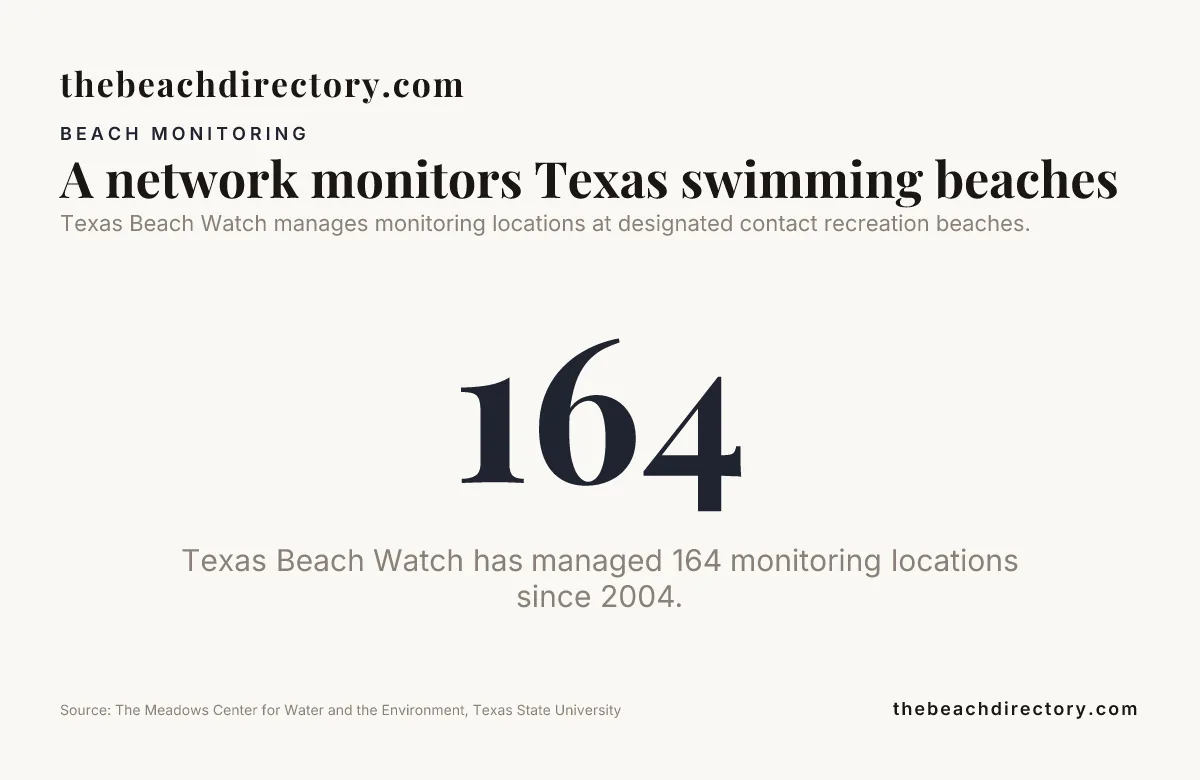
Texas Beach Watch manages monitoring locations at designated contact recreation beaches.
Source: The Meadows Center for Water and the Environment, Texas State University
Before fishing, check current Texas fishing license requirements, species rules, and local access restrictions for your chosen spot. Check the rules for your location and fishing method; surf, pier, jetty, and bay fishing may have different requirements.
Use this step by step beach field checklist
- Before setting out, check the specific beach access, parking and vehicle rules, current closures, surf forecast, tide, and beach flag warnings.
- On arrival, identify the designated swimming area, likely fishing area, access paths, and posted restrictions before unpacking gear.
- Choose a safe casting direction and distance. Keep hooks and lines well clear of swimmers, walking routes, and crowded entry points. Move if people enter the casting zone.
- Set up tackle on stable ground. Cover hooks when they are not in use, and store bait and sharp gear away from children and swimmers.
- Recheck conditions during the visit. Stop swimming or fishing if warnings change, surf becomes hazardous, or access restrictions apply.
Frequently Asked Questions
Which Texas Gulf beach is the prettiest?
Beauty depends on whether you prefer a remote island shore, open Gulf surf, or a quiet bay setting. South Beach offers an uninhabited island setting, while Matagorda Peninsula Beach gives visitors a long stretch of barrier shoreline to explore.
Are Texas beaches as good as Florida beaches?
Texas beaches can be just as rewarding for a coastal trip, especially when you want to combine Gulf surf with bay fishing or a calmer bay swim. The best fit depends on the kind of shoreline, facilities, and activities your group wants.
What bait should beginners use for surf fishing on the Texas coast?
Dead shrimp is a straightforward bait for a beginner to handle and use on a bottom rig. Keep the rig and hooks secured while walking near swimmers, and check local species rules before keeping a catch.
What season is best for a Texas beach trip that includes swimming and fishing?
Spring and fall are often comfortable times to plan a combined outing because daytime heat tends to be less intense than in midsummer. Check the forecast and water conditions for your dates, since seasonal timing does not replace a same day safety check.
Can beginners fish from shore without a boat?
Yes, Texas offers shorelines, piers, and jetties that anglers can reach without a boat. Choose a location with a clear casting area and match your gear to the structure and conditions where you plan to fish.
Are bay side beaches a good choice for young swimmers?
Calmer, shallow bay water can be a comfortable setting for young swimmers when conditions are suitable. Stay within the designated swimming area and follow posted guidance for that beach.
Conclusion
Texas Gulf Beaches: Where Swimming and Fishing Both Fit are easiest to choose when you compare the exact shoreline, water exposure, fishing access, and facilities, rather than relying on a town or island name alone. Pick a Gulf beach for open surf, a bay shoreline for calmer water, or a pier or jetty when defined fishing access suits the group, then check conditions and rules before you go.
Download the Companion Printable Reference Sheet (PDF)
Save or print our one-stop reference sheet for this guide: Texas Gulf Coast Beach Access Matrix: Bollard Permits, 4×4 Driving, Fishing Piers, and Swim Zones. Includes the full specification comparison matrix and step-by-step field checklist.