Florida Family Beaches: Compare Lifeguards, Parking and Facilities by the details of each public access, not by a town’s reputation alone. We help you weigh water conditions, lifeguard coverage, parking, routes to the sand and beach amenities so your family can choose a day that fits the children, the forecast and the plans.
Free Printable Field Reference & Checklist (PDF)
Save or print our one-stop reference sheet for this guide: Florida Family Beach Logistics Matrix (Parking Fees, Lifeguard Months, and Restroom Access) and Packing Checklist. Includes the full specification comparison matrix and step-by-step field checklist.
Key Takeaways
| Family question | Quick answer |
|---|---|
| What should we compare first? | Check the specific access for swimming conditions, lifeguards, parking, route length and facilities. Browse our Florida beach listings to begin choosing destinations. |
| Which beach has a measured route to the shore? | Clam Pass Beach Park has a three-quarter mile boardwalk through mangroves and a free tram from the parking area. |
| What helps with toddlers? | Look for a gradual, shallow entry, nearby restrooms and a short, manageable route. Keep an adult within arm’s reach in the water. |
| How do we judge beach safety? | Check the local flags, water guidance and lifeguard coverage for the exact access on the day of your visit. |
| What makes a longer visit easier? | Restrooms, outdoor showers, shade, picnic space and play areas can reduce the need to leave the beach park for basic breaks. |
| What if the parking lot is full? | Choose a legal backup access before you leave, then use it rather than circling or parking where it is not permitted. |
Compare beaches by the details that shape a family day
Start with the public beach access, not just the town name. Lifeguards, parking, restrooms and routes to the sand can differ between nearby stretches of shore, so a family-friendly reputation does not tell you what is available at the access you plan to use.
Use the table to build a short list, then check practical details with the relevant city, county or park authority. Current lifeguard hours, parking fees, accessible spaces, lot capacity, walking distance and facility status all belong to the individual access, not to a whole coastline.
| Beach or area | Documented comparison points | Check with the local authority |
|---|---|---|
| Crandon Park Beach | Two miles of beach, calm shallow water, a nature center, and a North End carousel and amusement area for children. | Lifeguard coverage, fees, accessible spaces, lot capacity, route to the sand and facility status. |
| Lowdermilk Park | Restrooms, showers, concessions, gazebos, a duck pond, playground equipment and volleyball courts. | Lifeguard coverage, fees, accessible spaces, lot capacity, route to the sand and facility status. |
| Vanderbilt Beach | Fine white sand, clear Gulf waters and typically calm swimming conditions. | Lifeguard coverage, fees, accessible spaces, lot capacity, route to the sand and facility status. |
| Clam Pass Beach Park | A three-quarter mile boardwalk through mangroves, a small lagoon and a free tram from the parking area. | Current lifeguard coverage, parking arrangements, accessible route options and facility status. |
| Lovers Key State Park | Two and a half miles of white sand reached by boardwalk or tram, plus hiking and biking trails. | Current lifeguard coverage, park access, parking arrangements and facility status. |
Choose priorities before comparing destinations. Toddlers may need shallow water and restrooms close to the day’s activities, while older children may value a playground, picnic area or nature activity that makes a longer stay more appealing.
Match Gulf and Atlantic conditions to children’s ages
Gulf beaches often have gentler surf than exposed Atlantic beaches, but coastlines do not guarantee a particular swim. Wind, storms, tides and local geography can change surf conditions at any beach, so assess the water at the chosen access on the day you arrive.
| Coast tendency | What families may prefer | What to assess on the day |
|---|---|---|
| Gulf side | Often gentler surf, which can suit families seeking a quieter swim. | Flags, wind, current, water depth and local swimming guidance. |
| Atlantic side | More exposed stretches can offer stronger waves for older children who enjoy active surf. | Wave strength, current, permitted swimming areas and lifeguard instructions. |
For young children, choose a gradual entry and shallow water when available, stay close enough to reach them immediately, and keep an adult within arm’s reach. Calm-looking water is not proof that swimming is safe, and a beach’s usual character never replaces the day’s flags and local guidance.
Crandon Park Beach pairs two miles of shoreline and calm, shallow water with a nature center and a North End carousel and amusement area for children. That mix gives families a beach option with activities beyond swimming, while the actual water and safety conditions still need to guide the day’s plans.
Older children may enjoy stronger waves, but set clear limits before they enter the water: swim only in permitted areas, stay within the conditions they can manage, and follow lifeguard directions. Families planning a surf-focused day can also use our guide to choosing surfboards as a starting point for learning about board options.
Check lifeguards, flags and swimming conditions
Confirm that lifeguards are on duty at the specific access and during the time your family plans to swim. Coverage and hours are set locally and can vary by beach and season, so a lifeguard station at one stretch of shore does not establish coverage nearby.
Families looking for both lifeguards and family facilities should treat them as two separate checks. A beach park such as Lowdermilk has documented family amenities, while the municipal or park schedule is the place to establish lifeguard coverage for the planned access and visit.
| Beach flag | Meaning | Family response |
|---|---|---|
| Green | Low hazard. | Stay attentive and follow posted guidance. |
| Yellow | Moderate hazard. | Use extra caution and keep children close. |
| Red | High hazard. | Keep children out of rough water and follow lifeguard instructions. |
| Double red | The water is closed to the public. | Do not enter the water. |
| Purple | Potentially dangerous marine life is present. | Follow posted notices and local safety guidance. |
Check beach flags and local safety guidance when you arrive, then check again before swimming if conditions change. A lifeguard improves the safety support at a beach, but does not make hazardous water safe.
At a beach without lifeguards, choose another swimming spot when conditions are uncertain, keep children close and stay out of water where swimming is prohibited. If a warning changes during your visit, adjust the plan promptly rather than relying on what the water looked like earlier.
Compare parking, routes to the sand and practical facilities
Compare parking fees, accessible spaces, lot capacity and the distance from parking to sand using current local information. Ask how the route is surfaced as well: a paved path, boardwalk and deep loose sand place different demands on a stroller, mobility device and tired children.
For a stroller or mobility device, a continuous paved or boardwalk route is often easier to manage than a long stretch of loose sand. Allow extra time when reaching the shore involves a long walk or tram ride, and plan for the return trip as carefully as the arrival.
Match facilities to the length of your stay. Restrooms and outdoor showers simplify breaks and rinsing off, while shade, picnic areas and playgrounds can make a longer visit more comfortable; a nearby restaurant is not a replacement for facilities at the beach access.
Lowdermilk Park combines beach access with concessions, gazebos, a duck pond, playground equipment, volleyball courts, restrooms and showers. Those amenities make it a useful profile for families planning time beyond a quick swim, while the lot, parking fees and route to the sand remain details to compare with the local authority.
Parking availability can shape the day as much as the beach itself, especially on weekends, holidays, school breaks and warm-weather days. Decide on a legal backup access and a time to leave before the lot fills, instead of circling or stopping where parking is prohibited.
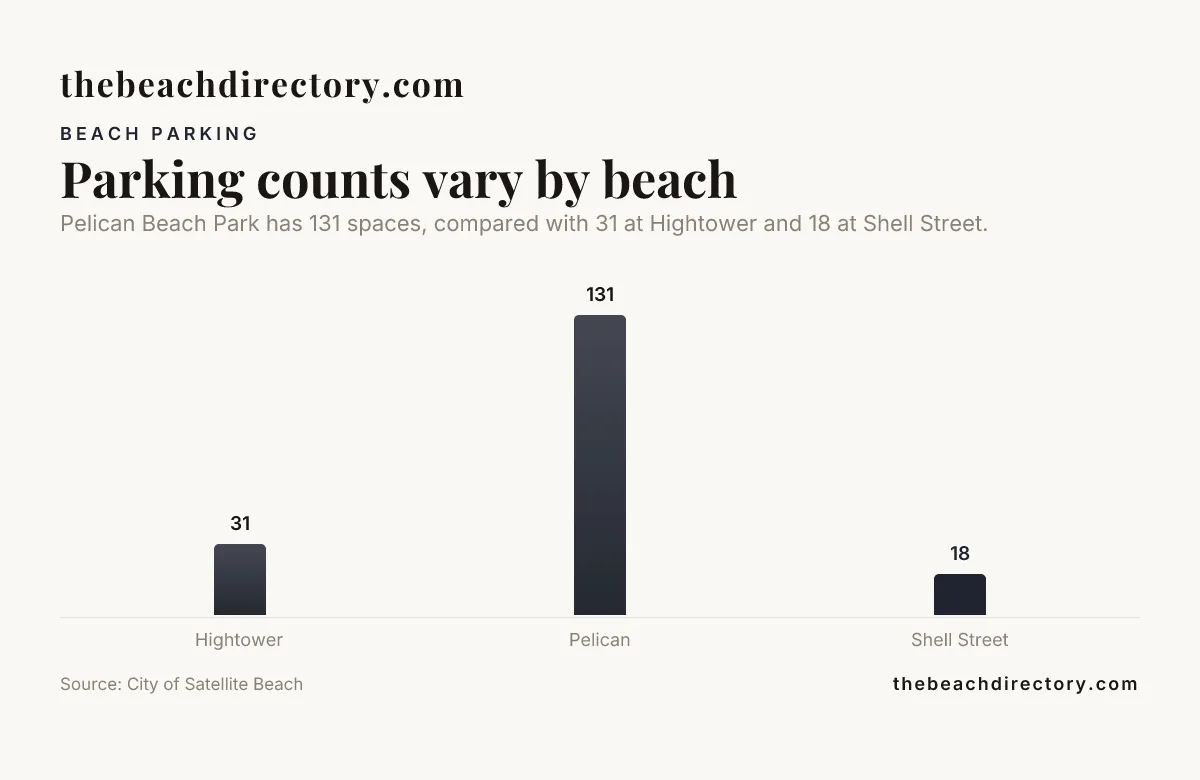
Pelican Beach Park has 131 spaces, compared with 31 at Hightower and 18 at Shell Street.
Source: City of Satellite Beach
Compare family-friendly beach profiles and nearby activities
Vanderbilt Beach has fine white sand, clear Gulf water and typically calm swimming conditions. Treat calm conditions as a general description, not a promise about the water on your visit.
Vanderbilt Lagoon adds kayak and paddleboard access to mangrove-lined waterways, giving families another activity to consider beyond the shoreline. Nearby attractions and dining can round out a trip, but first check what sits at the access itself so you know where restrooms, showers and other essential beach amenities are located.
South Walton includes 16 beach neighborhoods along Highway 30A, including Seaside, WaterColor, Alys Beach and Rosemary Beach. Compare the specific neighborhood and public access you plan to use rather than treating the whole area as one uniform beach.
Before planning the rest of the outing, check the beach access for parking, facilities, surf and lifeguards.
Each profile offers a different kind of family day: shallow water and children’s activities at Crandon, a park setting and practical facilities at Lowdermilk, and nearby rentals or outdoor activities around Vanderbilt and South Walton. A hidden gem or popular destination is the right fit only when its access and conditions work for your group that day.
Use a field checklist before leaving and on arrival
- Choose a primary access and a backup. Use current city, county or park information to check lifeguard coverage, parking fees, accessible spaces, facility status and temporary closures for both options.
- Check the forecast and local water guidance. Pack drinking water, sun protection, shade and child supplies for the time you expect to spend away from facilities.
- Plan for the route. Clam Pass Beach Park has a three-quarter mile boardwalk through a mangrove forest, a small lagoon and a free tram from the parking area. Use those options to judge whether the approach suits your children, stroller or mobility needs.
- Compare longer park routes with your group’s energy. Lovers Key State Park offers two and a half miles of white sand reached by boardwalk or tram, plus five miles of hiking and biking trails. Kayak rentals and guided eco-tours provide additional activities for families who want more than beach time.
- Orient everyone when you arrive. Note the route from the lot to the sand, locate restrooms and showers, find the lifeguard station if one is present, and check the flags before children enter the water.
- Recheck conditions during the visit. Leave the water promptly if guidance changes or a child becomes tired or cold, then use your backup plan if the beach day no longer feels right.
A short arrival routine helps prevent small surprises from turning into a difficult beach day. Point out a meeting place and the route back to the parking area, especially when the group is spread across a large park or boardwalk approach.
Frequently Asked Questions
Is there one Florida beach that is the most family oriented?
The best choice depends on whether your family values swimming conditions, play areas, nearby nature activities or a simpler route between the lot and the shore.
Can families take a stroller onto the sand at Florida beaches?
A standard stroller is usually easier to push on pavement and boardwalks than through soft, dry sand, where small wheels can sink. Wide tires designed for sand can handle some beach surfaces better, but they still require effort and may not suit every route.
Are beach wheelchairs available at public beaches in Florida?
Some public beach authorities provide beach wheelchairs, and arrangements can differ by location. Ask the local parks office whether a chair is loaned, reserved or delivered to an access point, and whether beach matting is available.
Are dogs allowed at Florida family beaches?
Dog access depends on local rules, designated areas, leash requirements and posted hours. Look up the rules for the exact park or access, and bring waste bags so you can leave the shoreline clean for other visitors.
What should families bring for shade when a beach has limited covered areas?
A beach umbrella or a compact pop-up canopy can provide portable shade, and a sand anchor helps secure an umbrella in beach conditions. Check local setup rules and place shade so it does not block lifeguard sightlines or crowd neighboring groups.
See also: thebeachdirectory.com.
Conclusion
The most useful Florida Family Beaches: Compare Lifeguards, Parking and Facilities plan begins with one specific access, then checks its water, lifeguards, parking, route and facilities against your family’s needs. Choose a primary beach and a legal backup, follow local guidance on arrival, and keep the day flexible when conditions change.
With comprehensive, up-to-date local tips and responsible beach tourism in mind, we can help you find family-friendly shores that fit the ages, interests and pace of your group.
Download the Companion Printable Reference Sheet (PDF)
Save or print our one-stop reference sheet for this guide: Florida Family Beach Logistics Matrix (Parking Fees, Lifeguard Months, and Restroom Access) and Packing Checklist. Includes the full specification comparison matrix and step-by-step field checklist.