Public access to an Oregon beach does not grant permission to camp overnight. For Oregon Beach Camping: Know the Shoreline Rules First, identify the land manager for your exact access point and confirm the current rule before setting up; at The Beach Directory, we help beach enthusiasts compare coastal destinations and plan responsible visits.
Free Printable Field Reference & Checklist (PDF)
Save or print our one-stop reference sheet for this guide: Oregon Shoreline Dispersed Camping Legality and Seasonal Closure Checklist. Includes the full specification comparison matrix and step-by-step field checklist.
Key Takeaways
| Planning point | What to do |
|---|---|
| Check permission | Ask the authority responsible for the precise shoreline whether overnight camping is allowed. |
| Shortlist locations | Browse Oregon beach destinations with camping and compare the setting with your plans. |
| Consider alternatives | Use beach camping listings to explore coastal locations, then verify each park’s current rules. |
| Compare campground types | Weigh tent sites, yurts, and cabins by shelter, sleeping setup, location, and the facilities actually listed for the site. |
| Check coastal hazards | Review tide tables, surf and weather forecasts, wildlife notices, and current fire rules. |
| Follow the signs | Treat closures and posted boundaries as part of your site plan, not as optional guidance. |
Confirm overnight permission for the exact beach
Public access to the shore and permission to stay overnight are separate questions. Confirm permission for the specific stretch you plan to use before unloading gear, because city and county restrictions, state park rules, and federal land rules can differ.
Start by identifying who manages the named access point and the shoreline you intend to use. It may be a city, county, state park, federal agency, or another land manager, and a nearby boundary can put two adjoining stretches under different rules.
- Name the access point. Give the authority the beach name, access road or trailhead, and the stretch of shore you mean.
- Ask about overnight stays specifically. Public access, day use, and overnight camping are separate permissions.
- Check current rules and signs. Ask about seasonal closures, marked boundaries, and any limits on where camping may occur.
- Do not generalize from a map pin. A rule for one beach or access point does not establish permission on another stretch.
For Oregon beach camping, use the managing authority’s current information and ask about the exact shoreline boundary, not just the closest named beach. A map can help you identify the location, but posted signs and the authority’s current rules establish what is allowed there.
Compare a beach stay with established coastal camping
A permitted overnight beach stay, a developed campground, and dispersed forest camping are different arrangements. The responsible authority, facilities, exposure, and time limits depend on which one you choose.
| Overnight option | Who sets the rules | Facilities and shelter | Exposure and access | What to verify |
|---|---|---|---|---|
| Overnight beach camping | The city, county, state, federal, or other authority responsible for that exact shoreline. | Facilities and shelter vary by location, including toilets, water, marked sites, and sheltered sleeping areas. | Direct exposure to wind, surf, tides, and changing beach conditions; access can vary by location. | Overnight permission, boundary, seasonal restrictions, closures, and permitted setup area. |
| Developed campground | The campground manager, such as a state park or federal land agency. | Site types and facilities vary; use the current campground information for the specific park. | Beach and trail access depend on the campground’s location and its access routes. | Reservation dates, operating season, site type, facilities, and access arrangements. |
| Permitted dispersed forest camping | The federal forest manager, and only where dispersed camping is allowed. | Facilities and designated sleeping areas vary, and dispersed sites may not have developed campground services. | The site may be away from the beach, with coastal access dependent on its location. | Whether camping is allowed at that spot, access limits, and applicable duration rules. |
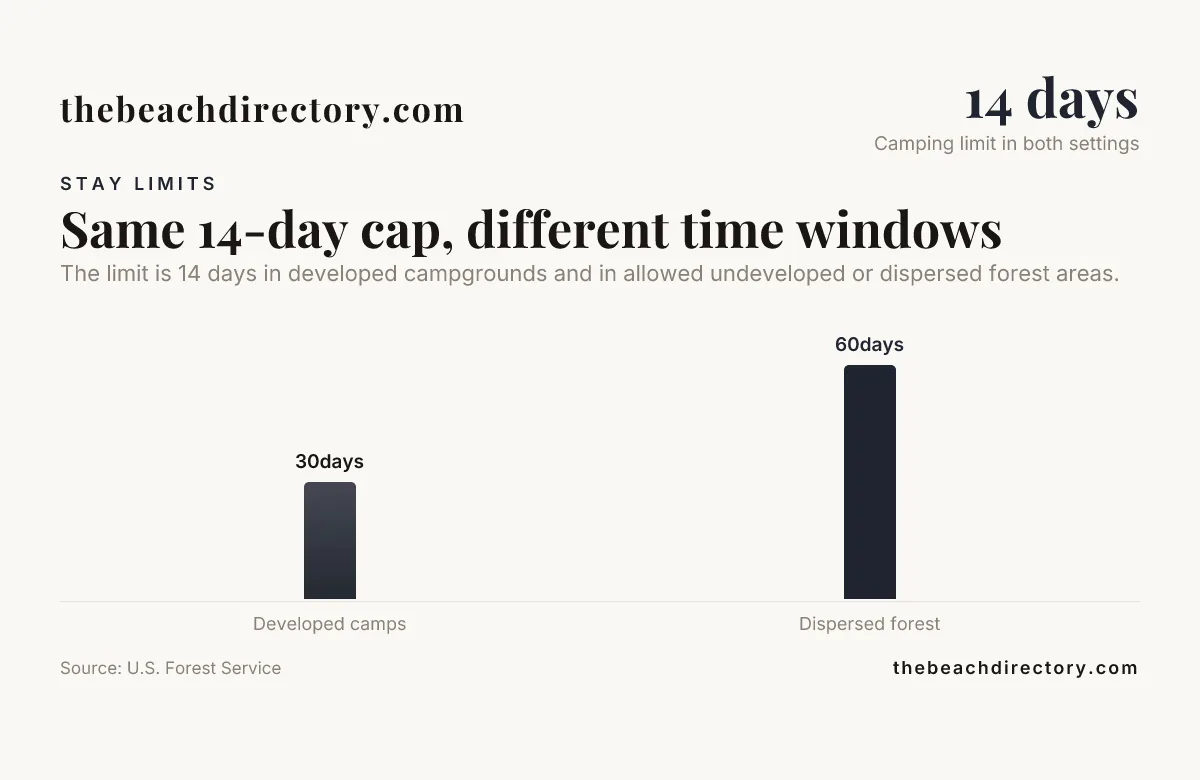
The limit is 14 days in developed campgrounds and in allowed undeveloped or dispersed forest areas.
Source: U.S. Forest Service
The camping listings include coastal parks with different accommodation formats and nearby activities. For example, Cape Lookout State Park sits on a sand spit between Netarts Bay and the ocean, with a beach, hiking trails, and campsites, yurts, and cabins in a coastal forest setting.
For U.S. Forest Service areas, camping is limited to no more than 14 days in any 30 day consecutive period in developed campgrounds, and no more than 14 days in any 60 day consecutive period in undeveloped or dispersed forest areas where camping is allowed. These duration limits apply to the forest settings described by the U.S. Forest Service; they do not establish permission to camp on a beach.
A tent site means you bring a tent and your own sleeping setup, while a yurt or cabin gives you an enclosed shelter; furnishings and facilities vary by unit. Compare the exact site description and the campground manager’s current reservation and operating information, since seasons, facilities, and beach or trail access differ by park.
Choose a campground for the coast experience you want
For sea stacks and tidepooling, Harris Beach State Park offers dramatic offshore rock formations, including Bird Island, also called Goat Island, Oregon’s largest offshore island and a National Wildlife Sanctuary. The park offers year-round camping and tidepooling, making it a useful example for visitors who want these coastal features near an established camping option.
According to the Oregon Parks and Recreation Department, Harris Beach State Park has 54 tent sites with water nearby. That detail can help tent campers compare the park with stays where a more enclosed shelter, such as a yurt or cabin, better suits their trip.
A tent stay puts the sleeping setup and weather protection in your hands, so plan for a tent, sleeping pad, and bag suited to the forecast. A yurt or cabin provides a roofed, enclosed space; furnishings, bathrooms, and cooking equipment vary by unit.
| Park and setting | Listed camping options | Nearby activities and features | Planning question |
|---|---|---|---|
| Harris Beach, sea stacks and offshore island scenery | Tent sites; year-round camping. | Sea stacks and tidepooling. | Does a tent stay suit your trip, and are current site details right for your dates? |
| Cape Lookout, a sand spit between bay and ocean | Campsites, yurts, and cabins in a coastal forest. | Beach and hiking trails; the Cape Lookout Trail extends 2.5 miles to the end of the cape. | Would you rather sleep in a tent, a yurt, or a cabin? |
Choose by the stay you want, not scenery alone. A tent offers an open-air camping setup, while a yurt or cabin gives you a more enclosed shelter; compare access and activities separately because routes to the water and facilities vary by option.
Look for shelter, access, and activities at nearby parks
Sunset Bay State Park is a protected-cove option with a swimming beach, camping facilities, ocean-view picnic areas, and access to the Cape Arago Highway trail system. It suits campers who want a cove setting and coastal walks or picnic areas as part of their stay.
A sheltered cove can feel different from an exposed open beach, but the shape of the cove does not make every site risk-free. Assess local wind, surf, and weather conditions, and match the park’s access and activities to what you hope to do during your visit.
Consider which features matter most: swimming access, trails, or picnic areas with ocean views. Conditions can affect whether an activity is comfortable or practical on a particular day, so plan alternatives rather than treating every listed activity as guaranteed in all weather.
Account for tides, wildlife, fires, and coastal conditions
Before any permitted shoreline setup, review tide tables and the surf and weather forecast. Keep the sleeping area well above the active waterline and away from low spots that high tides, surf, or storm surge can reach.
Beach shape and access can change. Avoid unstable dunes, steep erosion edges, wet sand near the waterline, and routes that rising water could cut off.
Check for western snowy plover protections, seasonal nesting closures, marked nesting areas, and posted wildlife restrictions. Keep distance from birds and stay off dune vegetation, which helps protect sensitive habitat.
Check the current local beach fire rules before lighting a fire, then use only an allowed location and method and fully extinguish it. Pack out trash, leave sand in place, and follow Leave No Trace practices around dunes and vegetation.
Coastal weather also shapes tent comfort. Pack a rain shell, warm layers, dry storage for clothing, and a sleeping setup appropriate for the forecast; set up only in a location that the land manager permits and that is safe for the expected conditions.
We also organize beach destinations by location and activity, which can help you shortlist a shoreline before you contact its land manager.
Use this field checklist before setting up
- Step 1: Pin the exact access point and identify the manager for the shoreline you intend to use.
- Step 2: Before traveling, confirm overnight permission, seasonal restrictions, boundaries, and marked-area limits with that authority.
- Step 3: If overnight beach camping is prohibited or unclear, choose an established campground and confirm its reservation details, operating season, facilities, and access arrangements.
- Step 4: Review tide tables, surf and weather forecasts, and site exposure. Reject low, unstable, dune-covered, or wildlife-restricted spots.
- Step 5: Recheck signs on arrival, follow current fire rules, stay out of sensitive vegetation and nesting areas, and leave the site free of trash.
Frequently Asked Questions
Are you allowed to take sand from Oregon beaches?
Plan to leave beach sand in place, since ordinary public access does not itself grant permission to collect natural material. If a school, research, or art project needs a sample, ask the land manager whether that site requires collection authorization.
How far ahead should I reserve an Oregon Coast campground?
For popular summer weekends and holiday dates, plan to reserve as soon as the campground’s booking window opens. Each park can use its own reservation calendar, so mark the opening date for the specific site rather than relying on one statewide schedule.
What facilities are common at established Oregon Coast campgrounds?
Developed campgrounds commonly provide toilets, and some also offer potable water, showers, picnic tables, or fire rings. Hookups, dump stations, and accessible facilities vary, so compare the specific campground’s listed amenities with your needs.
What should I do if a beach closure or restriction sign conflicts with my plans?
Do not enter the closed or restricted area, even if another sign, map, or online description appears to allow access. Move to an area clearly outside the posted boundary and contact the land manager to clarify the restriction before making a new plan.
What is a good time of year to camp on the Oregon Coast?
Late spring through early fall can make trip planning easier for visitors seeking longer daylight, while winter trips call for more flexibility around weather and access. Seasonal wildlife protections and campground operating dates can affect any preferred travel period.
What should I pack for tent camping in Oregon’s coastal weather?
Bring a tent with a rainfly, a groundsheet, sturdy stakes suited to the permitted campsite, an insulated sleeping pad, and a sleeping bag appropriate for the forecast. Pack warm layers, spare socks, a rain shell, and dry bags so wet outerwear does not soak your sleeping clothes.
Can I sleep in my vehicle at a beach access point?
Overnight parking and vehicle sleeping can have rules separate from shoreline camping. Vehicle overnight rules can be separate from shoreline camping rules, so ask the authority about that exact lot.
See also: Best Surf Boards.
Conclusion
Oregon Beach Camping: Know the Shoreline Rules First means checking the exact shoreline, its land manager, current overnight permission, and any seasonal boundaries before you unpack. When the rules do not allow a beach stay, an established coastal campground can offer a practical base for beaches, trails, tidepools, and other coastal activities.
Download the Companion Printable Reference Sheet (PDF)
Save or print our one-stop reference sheet for this guide: Oregon Shoreline Dispersed Camping Legality and Seasonal Closure Checklist. Includes the full specification comparison matrix and step-by-step field checklist.