Oregon Surf Beaches: Compare Breaks and Coastal Conditions by looking at wave type, swell, wind, tide, access, and your own ability before choosing a place to paddle out. We bring beach amenities, accessibility, conditions, and local tips together at The Beach Directory, so you can plan a coastal adventure around more than a forecast.
Key Takeaways
- What is the best surf beach in Oregon? There is no single best choice for every surfer. Pacific City, Short Sand, and the south coast each offer different settings, and the best option depends on the day’s conditions and your experience.
- Which spots are better for beginners? Look for smaller, more manageable surf, a clear route back to shore, and a lineup that matches your ability. A beach’s reputation does not make every swell or tide suitable for a new surfer.
- How should you compare breaks? A beach break changes with its sandbars, while point, reef, and jetty breaks are shaped by headlands, rock, or built structures.
- What should you check before paddling out? Compare the surf forecast and buoy report with wind and tide information, then watch the water from shore.
- Where can you compare coastal options? Browse the Oregon beaches listed for surfing alongside location and access details.
- What belongs in your gear plan? Bring a wetsuit suited to the water and session, plus the layers and supplies you need to stay warm before and after surfing.
Free Printable Field Reference & Checklist (PDF)
Save or print our one-stop reference sheet for this guide: Oregon Surf Break Exposure and Cold-Water Wetsuit Thickness Chart. Includes the full specification comparison matrix and step-by-step field checklist.
Know the Break Types Before You Choose a Beach
A beach break forms where waves break over sandbars. Its shape can change as sand shifts, so a familiar beach may have a different takeoff zone, channel, or closing section from one visit to the next.
A point break wraps along a point of land, while a reef break breaks over rocky or reef structure. A jetty break forms around a jetty and nearby sand, where currents and rocks can add hazards.
Those names describe how a wave forms, not how safe or easy it is. A sheltered looking cove can still have strong surf, and a sandy beach can have powerful currents. Check the break in front of you rather than relying on a label.
Compare Surf Beaches by Region, Access, and Setting
Oregon’s coast offers different trip styles as well as different surf possibilities. The comparison below pairs known beach features with practical questions to ask on arrival, without treating every beach as the same kind of break.
| Coastal area and beach | Known setting and access details | Surf comparison and planning notes |
|---|---|---|
| North coast, Short Sand Beach | A cove in Oswald West State Park, reached by a scenic 10 minute forest trail. | The trail is part of the trip plan, and assess the surf on arrival to decide whether it suits your ability. |
| Central coast, Pacific City Beach | A wide, sandy shore with a large dune and dory fishing boats that launch directly from the beach. | A known surfing destination. Give boat activity and other beach users room, and assess the surf zone independently of the beach’s popularity. |
| Central coast, Neskowin Beach | A quiet shore with the Ghost Forest and Proposal Rock visible or accessible at low tide. | Tide changes affect shoreline walking routes. Assess conditions at Neskowin independently of nearby Pacific City, even when both beaches appear calm from the road. |
| North coast, Manzanita Beach | A 7 mile stretch of sand with views of Neahkahnie Mountain, described as less crowded than many popular Oregon beaches. | The wide shoreline offers room for a beach visit, but crowd levels do not predict wave conditions. Inspect the surf and currents before entering. |
Use the table to narrow down a coastal area, then check current conditions for the exact beach. A nearby spot can face a different direction, have a different bottom shape, or respond differently to the day’s swell and wind.
Match the Break to Your Ability
The best beginner surf beaches are the ones offering manageable waves and a clear path to shore during the conditions you are actually facing. Choose a session that lets you control your board, get through the surf, and return to the beach without relying on luck.
Intermediate surfers can compare how a beach break’s sandbars shape the takeoff and ride, then look for conditions that fit their skills. Experienced surfers may seek more powerful or technical waves, but local currents, rocks, and changing entries still call for a careful assessment.
Ability labels are conditional. The same beach can feel forgiving in small surf and become unsuitable when the swell grows, the tide changes, currents strengthen, or the entry and exit become difficult.
Do not paddle out if you cannot make it through the breaking waves or return to shore safely. Watch a full set from the beach, identify where waves break and where water flows back out, and choose a different plan if you cannot explain your route in and out.
Read Swell, Wind, Tide, and the Surf Forecast
Start with the surf forecast and buoy report, but read them as a set of clues rather than a guarantee of what you will find at the shoreline. Compare swell direction, wave size, and period with the beach’s orientation, then check whether the wind is offshore or onshore.
- Swell direction: Consider whether the incoming swell can reach the beach directly or is partly sheltered by coastal features.
- Offshore wind: Wind blowing from land toward the water can hold up wave faces. Strong wind can still make a session difficult.
- Onshore wind: Wind blowing from the water toward land can roughen wave faces and make a lineup harder to read.
- Tide: A changing tide can alter wave shape, water depth, exposed rocks, and access around the beach.
- Sandbars: Watch where waves break and where channels form. A forecast cannot show every change in a beach break’s shifting sandbars.
Oregon’s coastline has an average vertical tidal range of approximately 1.5 to 2 meters (5 to 6 feet), according to the Oregon Department of Geology and Mineral Industries. Tide timing can affect both the surf and the route you use to reach or leave the water.
After reviewing the forecast, spend time watching the beach. Note how long sets take to arrive, whether waves close out across the whole bank, where the current moves, and whether you can identify a safe exit.
Seasonal Surf and Cold Water Preparation
Oregon surf conditions shift through the year. Summer generally brings smaller offshore waves, while winter storms can bring more powerful surf and rougher coastal conditions. Spring and fall can change quickly, so plan around the forecast instead of assuming the season guarantees a particular kind of day.
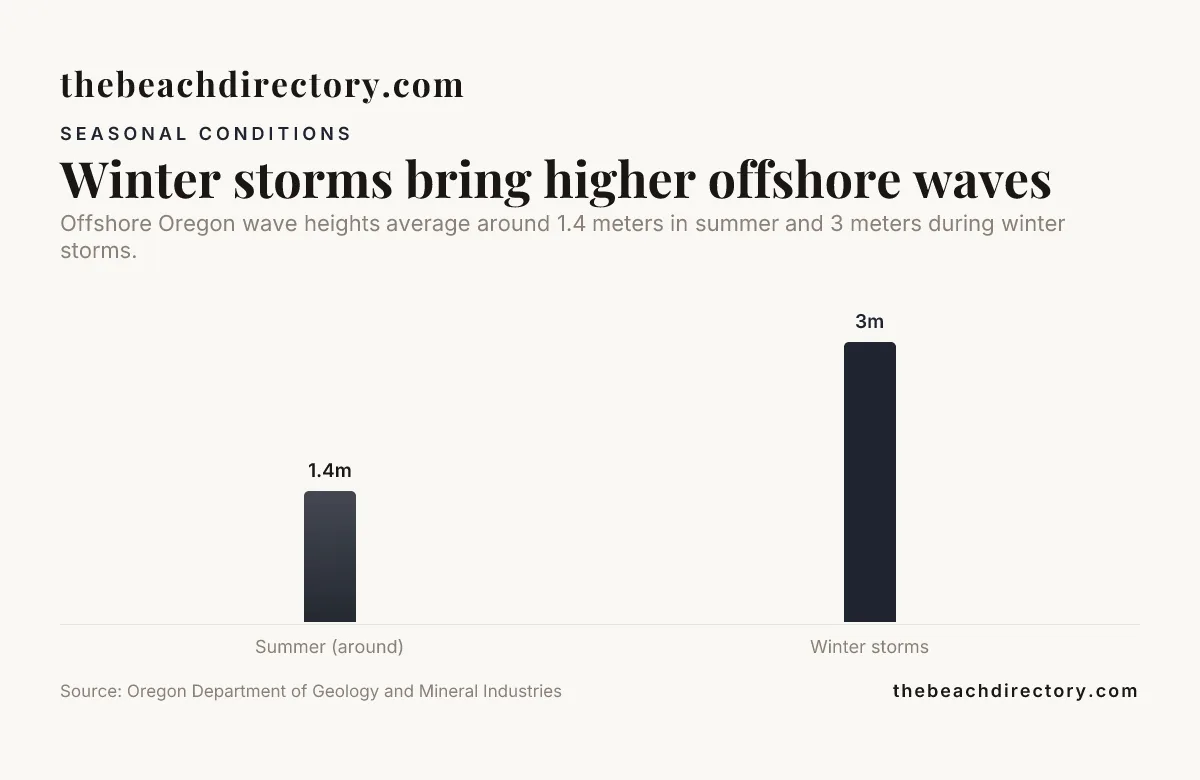
Offshore Oregon wave heights average around 1.4 meters in summer and 3 meters during winter storms.
Cold water makes preparation essential. Choose a wetsuit that suits the water temperature and the length of your session, and consider a hood, gloves, and boots when they help you stay warm and maintain comfort in the water.
Pay attention to early signs of cold stress, including persistent shivering, clumsy hands, and difficulty concentrating. Set a clear time to leave the water, plan your exit before paddling out, and have dry layers ready for afterward.
Board choice should suit your experience and the conditions you can manage. A board that feels controllable in the water helps you focus on reading waves, currents, and other surfers.
Plan for Currents, Beach Access, and Lineup Etiquette
Look for rip currents, which flow away from shore, and longshore currents, which move along the beach. Rip currents can move at speeds as fast as eight feet (2.4 meters) per second, according to Smithsonian Ocean.
Also watch for rocks, jetties, boats, and zones where waves break over shallow areas. At Pacific City, dory boats launch directly from the beach, so keep clear of active launch and landing areas and give boat operators plenty of space.
Surf access is not always the same as general beach access. At Short Sand, the forest trail is part of the approach; at Neskowin, tide can affect shoreline routes. Check posted closures, trail conditions, and the return path, especially when rising water could cut off access around a headland or rock.
Good lineup etiquette helps everyone share the break. Wait your turn, do not drop in on a surfer already riding a wave, and avoid paddling through another surfer’s takeoff path. At a crowded beach, watch the pattern before joining the lineup and give people room to move safely.
Step-by-Step Field Checklist Before You Paddle Out
- Choose a beach for your ability. Compare the break’s setting, access, and expected conditions rather than choosing by reputation alone.
- Read the forecast and buoy report. Check swell direction, wave size, period, and wind, then consider how the beach faces the swell.
- Check the tide and access route. Identify when the tide will change and whether a trail, headland, or rocky section affects entry or exit.
- Watch the surf from shore. Observe several sets, locate rip currents and channels, and see how waves break across the sandbars.
- Identify hazards and other users. Look for rocks, jetties, dory boats, swimmers, and the main lineup before carrying your board into the water.
- Set a safe exit plan. Decide where you will leave the water and what you will do if the current carries you away from that point.
- Check your cold water kit. Put on suitable gear, prepare dry layers, and set a clear limit for how long you will stay in the water.
- Make the final call on site. If the surf, current, entry, or return route exceeds your ability, choose another beach or stay out of the water.
When planning a trip, leave room in your schedule to choose between beaches as conditions change. A flexible plan makes it easier to match the day’s surf to your skills and the coastal access available.
Frequently Asked Questions
What does wave period tell me when I check a surf forecast?
Wave period is the time between successive waves in a set, and it helps describe how the swell is organized. Compare it with wave size and local conditions, since wave height alone does not explain how powerful or manageable a surf session will feel.
Can I surf at low tide on the Oregon coast?
Low tide can expose shallows, rocks, and sections of shoreline that are covered later, and it can change how a sandbar breaks. Assess the tide alongside the spot’s other conditions; low water does not improve every break.
What should I do if a current carries me away from my planned exit?
Stay calm, keep yourself afloat, and signal for help if you need it. Avoid exhausting yourself by fighting a strong current directly, and use your knowledge of the shoreline and conditions to choose a safer route back when you can.
How should I dry and store a wetsuit after surfing?
Rinse the suit with fresh water, then hang it to dry in a shaded, ventilated place. Keep it away from prolonged direct sun and high heat, which can shorten the life of the material.
How much room should I give dory boats at Pacific City Beach?
Keep your surf session clear of active boat launch and landing areas, and do not paddle across a boat’s path. Leave space on the beach for boats and their crews to move between the shore and the water.
See also: Best Surf Boards.
Conclusion
Oregon Surf Beaches: Compare Breaks and Coastal Conditions by weighing the break type, swell, wind, tide, access, and hazards together. From a forest trail to a wide sandy beach or a south coast surf destination, choose the spot that fits your ability on the day, prepare for cold water, and leave yourself a safe route back to shore.
Download the Companion Printable Reference Sheet (PDF)
Save or print our one-stop reference sheet for this guide: Oregon Surf Break Exposure and Cold-Water Wetsuit Thickness Chart. Includes the full specification comparison matrix and step-by-step field checklist.