Florida Gulf beaches offer distinct swimming destinations, from the Panhandle’s brilliant white sand to quieter barrier island settings farther south. We compare shoreline character, documented swimming conditions, travel party needs, and access so you can choose the coastal experience that fits your plans.
Free Printable Field Reference & Checklist (PDF)
Save or print our one-stop reference sheet for this guide: Florida Gulf Coast Swimming Beach Comparison and Beach Warning Flag Reference Card. Includes the full specification comparison matrix and step-by-step field checklist.
Key Takeaways
| Question | Quick answer |
|---|---|
| How do Panhandle beaches differ from those farther south? | The Panhandle is known for white sand and Gulf waters; southern destinations include varied barrier island settings and nearby activities. |
| What is the prettiest beach on Florida’s Gulf Coast? | That is personal preference. Destin is known for emerald green water and sugar white sand, while Siesta Key is known for its quartz sand and clear water. |
| Which destination has the clearest water? | Siesta Key is described as having clear water; compare Vanderbilt Beach with current conditions at the specific access. |
| Which Gulf beach is best for swimming? | The right choice depends on conditions at the specific access on your visit date. |
| Are Florida Gulf beaches suitable for families? | Yes. Compare the specific access for entry, restrooms, shade, and lifeguard coverage, since facilities vary between locations. |
| When should I visit for swimming? | Choose dates that suit your preferred water temperature, weather tolerance, and crowd level rather than relying on one universally best month. |
Browse The Beach Directory to explore beach amenities, accessibility, conditions, and local tips for coastal destinations.
Start with Region and Beach Atmosphere
Panhandle destinations such as Destin Beach and South Walton are known for white sand and Gulf waters. Destin pairs emerald green water and sugar white sand with East Pass, which connects the Gulf to Choctawhatchee Bay, and HarborWalk Village.
South Walton includes 16 distinct beach neighborhoods along Highway 30A, including Seaside, Watercolor, Alys Beach, and Rosemary Beach. Its bright sand and turquoise water sit alongside planned communities, giving visitors several different settings to consider within one destination.
| Destination | Region | Documented beach character | Useful specification |
|---|---|---|---|
| Destin | Florida Panhandle | Emerald green water and sugar white sand | East Pass connects Gulf waters with Choctawhatchee Bay |
| South Walton | Florida Panhandle, Highway 30A | Brilliant white sand, turquoise water, coastal dune lakes | 16 beach neighborhoods |
| Siesta Key | Southwest Gulf Coast | White quartz sand and clear water | Sand is 99% pure quartz |
| St. George Island State Park | Florida Panhandle barrier island | Undeveloped shoreline, dunes, Gulf and bay waters | Nine miles of shoreline |
Further south, beach character and nearby activities vary from one community and barrier island to another. A destination name can cover multiple neighborhoods or public beach accesses, so narrow your choice to the specific area that suits your group; you can also browse Florida beaches by swimming activity.
Compare Sand, Water Appearance, and Swimming Conditions
Use the same criteria for each option: sand character, reported water appearance, typical calmness when documented, shoreline entry, and whether a lifeguarded swimming area is available at the access you plan to use.
Siesta Key Beach is known for sand that is 99% pure quartz and water described as crystal clear. Its listed facilities include tennis courts, picnic areas, and a playground, which can add options for a family beach day beyond swimming.
| Swimming comparison | Vanderbilt Beach | Siesta Key Beach |
|---|---|---|
| Sand | Compare at chosen access | 99% pure quartz sand |
| Water appearance | Check current conditions | Crystal clear water |
| Swimming conditions noted | Check current conditions | Check current conditions at the access |
| Other listed facilities | Check access details | Tennis courts, picnic areas, and a playground |
Clear water and calmness can change with wind, surf, rainfall, and local conditions. A photograph or a destination’s reputation cannot establish the swimming conditions on the day you arrive, so compare current notices and the specific access rather than relying on a broad beach name.
For more options and practical information, browse Florida beaches.
Match the Destination to Your Travel Party
For a family swim day, prioritize manageable water entry, nearby restrooms, shade, and a lifeguarded area when available. Facilities and supervision can differ between public accesses, so choose the precise location around the needs of your group, since facilities and supervision vary between accesses.
Couples and visitors looking for a quieter or more natural setting can compare the effort required to reach the shore, the amount of development nearby, and the surrounding natural features. A barrier island is not automatically secluded, so look at the individual beach area and nearby activity before deciding.
St. George Island State Park offers nine miles of undeveloped shoreline at the eastern end of a barrier island, with access to both Gulf and bay waters. Its dunes and undeveloped shoreline suit visitors who want a more natural setting.
Weigh Nearby Activities, Amenities, and Access
Miramar Beach combines white sand and Gulf waters with nearby shopping and dining. That mix suits visitors who want breaks from swimming without making every outing a full day on the shoreline.
Lovers Key State Park combines two and a half miles of white sand beaches with five miles of hiking and biking trails, estuaries, tidal lagoons, kayak rentals, and guided eco tours. The park’s boardwalk or tram access and natural surroundings make it a good fit when swimming is only one part of the day.
If someone in your travel group also plans to surf, our separate guide to surfboard options can help with equipment planning for that activity.
Before choosing an access, compare public entry, parking, admission requirements, restrooms, showers, accessibility, and lifeguard coverage through current local authority information. A nearby attraction or a well known beach name does not guarantee that every access has the parking or facilities your group needs.
Plan Around Season and Changing Conditions
Warm season weather can bring heat, afternoon storms, and changing surf, while cooler months may make swimming less comfortable even when beaches remain accessible. Whether you can swim year round depends on your comfort with water temperature and the weather on your chosen dates.
Check the forecast, wind, surf, and water conditions for your actual visit rather than relying on a general description such as calm or clear. Rain, strong wind, and rough surf can change water clarity, and clear visibility alone does not show whether swimming is safe.
Choose dates around your preferred water temperature, tolerance for heat or storms, and desired crowd level. This approach gives you a more useful answer to when to visit than a single month presented as ideal for every swimmer.
Check Water Quality, Flags, and Rip Current Risk
Rip currents can carry swimmers away from shore even when the water appears calm. The National Weather Service, Tallahassee states that rip currents can travel as fast as 8 feet per second.
Before entering the Gulf, check local beach flags, rip current advisories, water quality notices, and swimming restrictions for that day. Follow lifeguard instructions, and treat a posted closure as a direction not to enter the water.
The Florida Department of Health classifies marine water quality as Good at 0 to 35 enterococci per 100 milliliters of marine water. That result describes water quality, not surf strength or overall swimming safety, so check both water notices and current beach conditions.
If a rip current catches you, stay calm, float or tread water, and signal for help. When able, swim parallel to shore to move out of the current; do not fight it by swimming directly toward the beach.
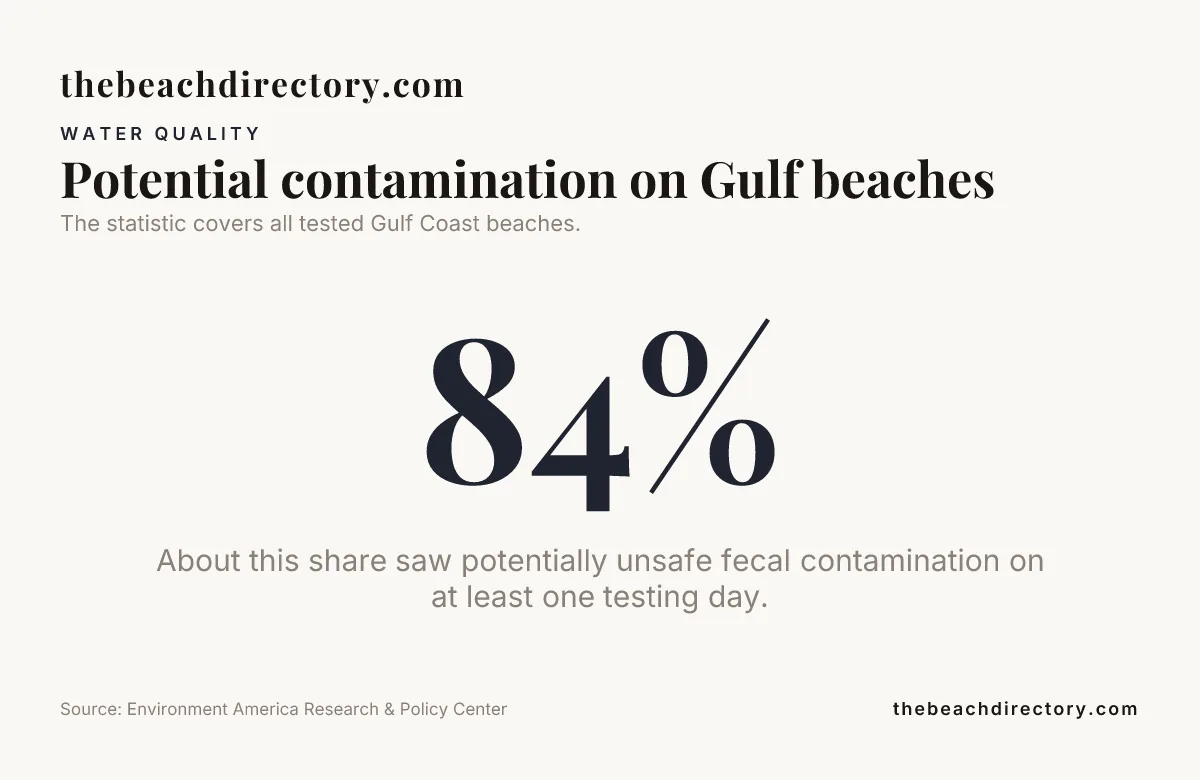
The statistic covers all tested Gulf Coast beaches.
Use This Step by Step Beach Field Checklist
- Choose the destination and exact public access. Match your group’s swimming priorities, travel time, and preferred atmosphere to a specific beach area, not only a town or island name.
- Check conditions before leaving. Review the current weather, surf, beach flags, rip current advisories, water quality notices, and local swimming restrictions.
- Confirm the practical details. Use local public information to check parking, admission, restrooms, showers, accessibility, and lifeguard coverage for your chosen access.
- Reassess when you arrive. Look at flags, surf, water appearance, crowding, and entry conditions, then change access or skip swimming if conditions do not feel appropriate.
- Stay close and swim with care. Keep children within close reach, swim near a lifeguard when available, and never treat clear water or calm looking surf as a safety guarantee.
Frequently Asked Questions
Can you snorkel at Florida Gulf beaches?
Yes, snorkeling is possible when surf and visibility suit the location. Check local conditions and choose a site with underwater features that interest your group.
Can I take shells home from a Florida Gulf beach?
Take only empty shells where local rules allow, and leave living animals and protected species in place. State parks and local authorities may set additional collection rules for specific beaches.
Are dogs allowed on Florida Gulf beaches?
Dog access depends on the specific beach, park, and local rules. Look for a designated dog beach and check leash requirements and permitted hours before setting out.
Do I need water shoes at Florida Gulf beaches?
Water shoes can protect feet from shell fragments and rough patches underfoot, and they can make walking between parking and the water more comfortable. Choose a snug pair that stays secure while wading.
What does a double red beach flag mean in Florida?
A double red flag means the water is closed to public swimming. A single red flag indicates high hazard, so follow posted instructions and lifeguard directions at the access you are visiting.
Can you swim at night on Florida’s Gulf Coast?
Access hours and lifeguard coverage vary by beach, and low visibility makes it harder to judge waves, other swimmers, and the shoreline. Check posted hours and local rules before planning an evening swim.
What beaches to stay away from in Florida?
Avoid swimming at a beach that is closed, has hazardous flags or surf, or is affected by a rip-current or water-quality advisory.
Choose the Gulf Beach That Fits Your Swim Day
Florida Gulf Beaches: Compare Swimming Destinations by the qualities that matter for your group: sand, water appearance, typical calmness when documented, nearby activities, natural setting, and practical access. Destin and South Walton offer distinct Panhandle experiences, while Siesta Key, Vanderbilt Beach, St. George Island, Miramar Beach, and Lovers Key each bring different combinations of shoreline and surroundings.
We recommend choosing a specific beach access, checking current conditions, and using the field checklist before you enter the water. With the right match, your Florida Gulf Coast visit can balance swimming, beach amenities, and responsible time along the shore.
Download the Companion Printable Reference Sheet (PDF)
Save or print our one-stop reference sheet for this guide: Florida Gulf Coast Swimming Beach Comparison and Beach Warning Flag Reference Card. Includes the full specification comparison matrix and step-by-step field checklist.